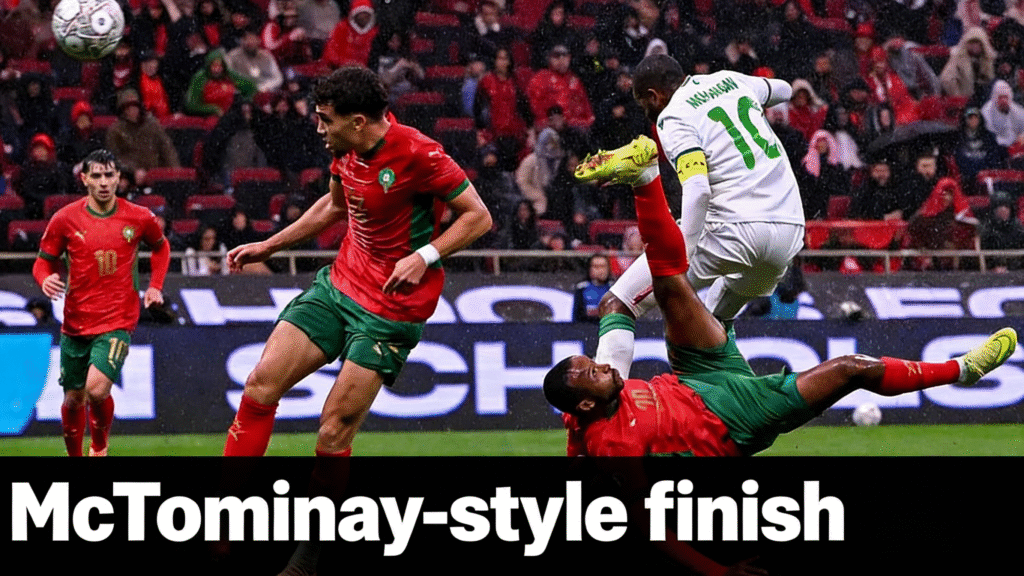
Morocco, Scotland’s group-stage opponent at this summer’s World Cup, claimed a 2-0 win over Comoros in their home Africa Cup of Nations (AFCON) opener. Ayoub El Kaabi’s spectacular bicycle kick 15 minutes from full-time echoed Scott McTominay’s iconic World Cup qualifying goal for Scotland against Denmark.
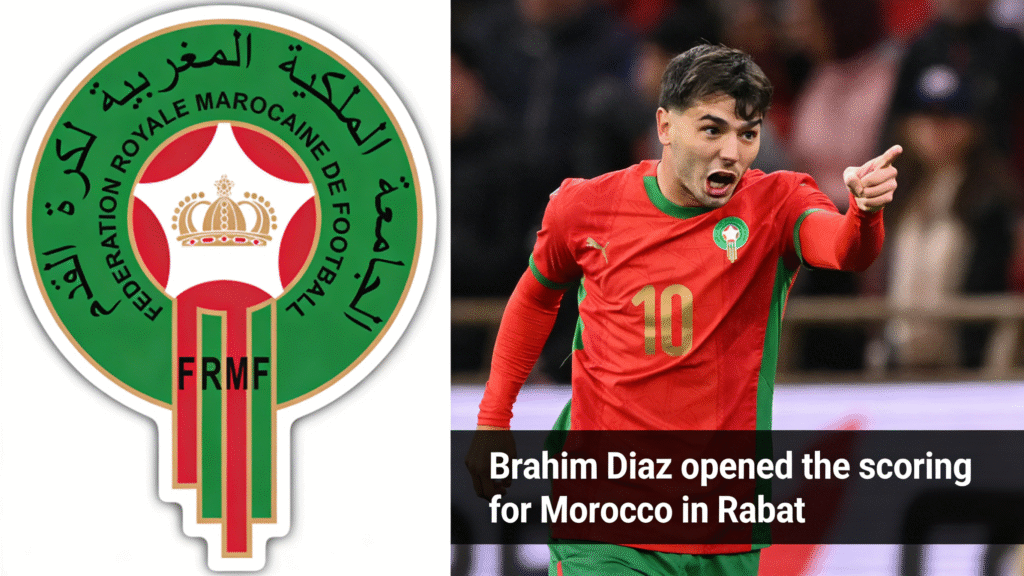
Brahim Díaz’s second-half strike sealed the victory in front of 60,180 fans in Rabat. The win extended the “Atlas Lions’” world-record winning streak to 19 matches. For Scotland, this game offers crucial insights into their upcoming World Cup rival.
Brahim Díaz: A Double-Edged Sword of Controversy and Threat
Real Madrid winger Brahim Díaz was the match’s most scrutinized player, delivering a “double-edged sword” performance. Just 10 minutes in, he sought contact with Iyad Mohamed’s stationary foot near the touchline before falling, earning a controversial penalty.
Comoros goalkeeper Yvon Mvogo saved Sofiane Rahimi’s spot-kick. Shortly before halftime, Díaz went down again between two defenders appealing for another penalty but was penalized for handball instead.
Beyond the controversies, Díaz’s offensive threat is undeniable. Though his free-kicks were subpar, he was granted freedom to drift between flanks and central areas, acting as a key attacking link.
After a 5-game goalless drought (following 6 goals in 8 games post-nationality switch), Díaz ended his slump. He latched onto Noussair Mazraoui’s clever chip, evaded defense, and slotted home easily.
For Scotland, defending Díaz is a dilemma: tight marking risks penalties, while giving space could lead to breakthroughs and goals.
High-Tempo Pressing Style vs. Low-Block Vulnerability
Under Walid Regragui, Morocco uses a 4-3-3 formation, excelling at high-tempo pressing, quick wide switches to stretch defenses, and rapid set-piece execution to maintain offensive intensity.
However, 97th-ranked Comoros (108th in the world) proved the African powerhouse is not unbeatable. For most of the first half, Comoros employed a low-block defense, limiting Morocco to 7 shots with just 1 on target.
Morocco delivered 16 crosses into the penalty area in the first half, with Mazraoui frequently overlapping to assist, but failed to break through. It was only when Comoros turned aggressive and attacked in the second half that Morocco seized the chance to open the scoring.
After taking the lead, Morocco continued pressing hard, showcasing strong game control.
Defensive Flaws: Fluster Under Press and Counterattack Risks
Morocco’s defense exposed clear vulnerabilities in this game. When Comoros rarely pressed high, Moroccan players looked flustered on the ball repeatedly.
In defending counterattacks, they were caught out twice by long balls through the central defense. Shortly after Díaz’s goal, Standard Liège forward Rafiki Said had a one-on-one opportunity but hit his shot off onrushing goalkeeper Yassine Bounou.
Bounou faced only one real test: a bold 50-yard free-kick from Youssouf M’Changama. The Al Hilal keeper failed to hold the ball first time, gathering it on the second attempt—perhaps excusable due to persistent heavy rain.
Squad Depth Shines, Tough Matches Ahead as Real Test
Assessing Morocco’s true strength from a game against AFCON’s smallest participant (even with home support) is difficult. Comoros had topped Tunisia in qualifying and upset Ghana in the previous AFCON, but Morocco’s lineup differed drastically from their Qatar Arab Cup-winning squad.
Comoros, meanwhile, had just one Arab Cup starter in their XI. Even so, Morocco displayed impressive squad depth. Captain Achraf Hakimi, sidelined with an ankle injury since early November’s Champions League, only came off the bench, yet the team still won smoothly.
32-year-old Olympiacos forward El Kaabi substituted in and sealed the win with a stunning bicycle kick in just 25 minutes. Though his jump height was lower than McTominay’s, the goal electrified the crowd.
Morocco will face Mali on Boxing Day and Zambia on December 29—tough tests for their squad depth. Scotland manager Steve Clarke has ample time until the June 19th Gillette Stadium showdown to analyze his opponent’s strengths and weaknesses fully.